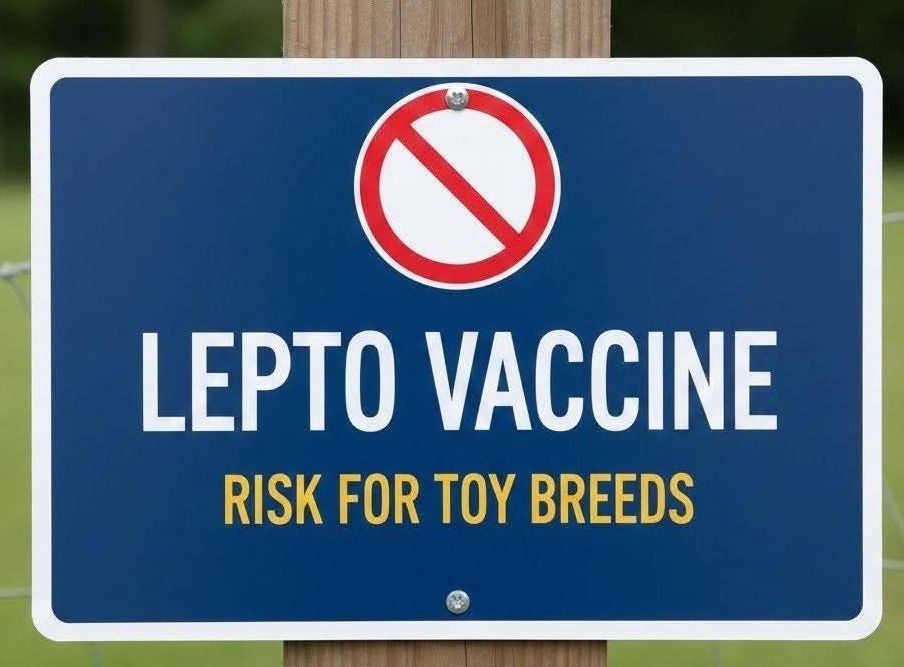
Lepto in Small Breed Dogs
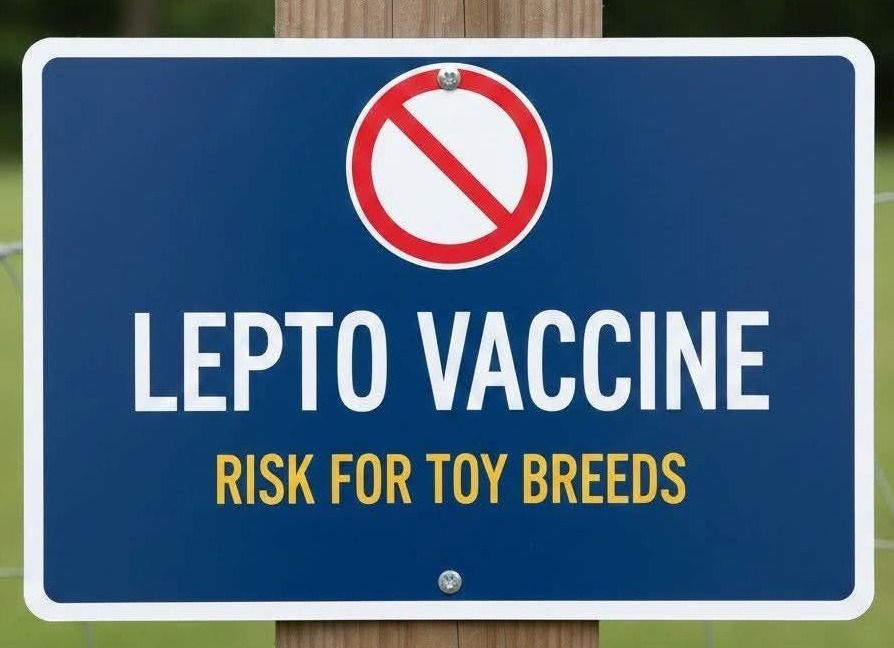
The decision to administer the Leptospirosis (Lepto) vaccine is often met with significant caution.
Many breeders and small-dog advocates argue that for these tiny companions, the potential for severe adverse reactions far outweighs the likelihood of infection. The following article outlines the specific risks and lifestyle factors that make the Lepto vaccine a point of concern for toy/small breed owners (and in fact, any sized breed of dog)..
The Lepto vaccine has one of the highest rates of adverse reactions in dogs, especially small breeds, puppies, seniors, and immune-compromised dogs. It is non-core, offers short-lived protection, requires frequent boosters, and doesn’t cover all strains, so the risk can outweigh the benefit for low-exposure dogs.
The Danger of Adverse Reactions
The primary argument against the Lepto vaccine in small breeds is its high rate of Vaccine-Associated Adverse Events (VAAEs). Small dogs are physiologically more vulnerable to vaccine reactions than large breeds, and the Lepto shot is frequently cited as one of the most "reactive" injections in veterinary medicine.
* Hypersensitivity and Anaphylaxis: Small breeds are at a statistically higher risk for Type I hypersensitivity. This can manifest as facial swelling, hives, and acute vomiting, or escalate to life-threatening anaphylactic shock shortly after the injection.
* The Dosage Disparity: Currently, vaccines are not weight-adjusted. A 2kg Yorkie receives the exact same volume of antigen and chemical adjuvants as a 60kg Mastiff. This creates a massive over-stimulation of the small dog's immune system, which many believe leads to systemic inflammation.
* Localized Vasculitis: In small breeds, the Lepto vaccine has been linked to localised vasculitis (inflammation of the blood vessels) at the injection site, this can result in permanent focal alopecia (hair loss) or skin necrosis.
Why it is Often Unnecessary
For many small dogs, the actual risk of contracting Leptospirosis is virtually zero, making the dangerous side effects of the vaccine an unnecessary gamble.
* Low-Risk Lifestyles: Leptospirosis is typically spread through the urine of wildlife in standing water, marshlands, or soil. Most toy breeds live strictly indoor lives, walk on city pavement, and are rarely—if ever—exposed to the rural or suburban environments where the bacteria thrive.
* Limited Strain Coverage: There are over 250 known "strains" (serovars) of Leptospirosis. Most vaccines only cover four. If a dog is exposed to a strain not included in the shot, they remain unprotected despite having taken the risk of the injection.
* Short-Term Efficacy: Unlike core vaccines (Distemper, Hepatitis, Parvo) which can provide years of protection, the Lepto vaccine requires annual or even bi-annual boosters. This subjects a small dog to the cumulative risk of a reaction every 12 months for a disease they are unlikely to encounter.
Hidden Risks:
The Cumulative Effect - Small breeds often face "vaccine fatigue" because their small bodies struggle to process multiple antigens simultaneously.
* Combination Shot Dangers: The Lepto vaccine is frequently bundled into a combined shot (with DHP or DHPPi). Research suggests that the more antigens given at once, the higher the risk of a reaction. For a small dog, the addition of the Lepto component to a standard booster can be the tipping point for the immune system.
* Autoimmune Concerns: There is ongoing concern among some holistic veterinarians and breeders that the aggressive adjuvants used in the Lepto vaccine may trigger long-term immune-mediated diseases in genetically predisposed small breeds.
Protecting Your Toy Breed
The Lepto Vaccine is not mandatory, YOU DO HAVE A CHOICE
If you choose to decline the Lepto vaccine based on these risks, you can minimize environmental exposure by:
* Avoiding stagnant water or puddlesduring city walks.
* Ensuring your garden is free of rodent attractants.
* Focusing only on "core" vaccines (Distemper, Hepatitis, Parvo) that offer long-term protection with fewer boosters.